



Cytochrome P450 Substrate
-
G256 dihydrochloride
 0 ImagesCat. No.: HY-177148ACAS No.: 134867-96-2
G256 dihydrochloride is a cytochrome P450 substrate with antiarrhythmic properties. In recombinant monooxygenase systems, G256 dihydrochloride undergoes N-hydroxylation of the terminal aminoguanidine nitrogen, as well as ring hydroxylation catalyzed by cytochrome P4502C3. G256 dihydrochloride generates N-hydroxyaminoguanidine metabolites via N-hydroxylation in liver microsomal fractions. G256 dihydrochloride produces phenol metabolites through ring hydroxylation in both liver microsomal fractions and recombinant cytochrome P450 systems. G256 dihydrochloride can be used for research on arrhythmias.
-
Antitumor agent-183
 0 ImagesCat. No.: HY-159176CAS No.: 2775428-94-7
Antitumor agent-183 (compound 3f) has antitumor activity with metabolic stability. Antitumor agent-183 inhibits cancer cell growth, with IC50s less than 5 nM for A549, HCT116, and HS578T cells. The albumin-bound nanoparticle formulation of Antitumor agent-183 has prolonged retention in the tumor tissues.
-
Desethylamiodarone hydrochloride (Standard)
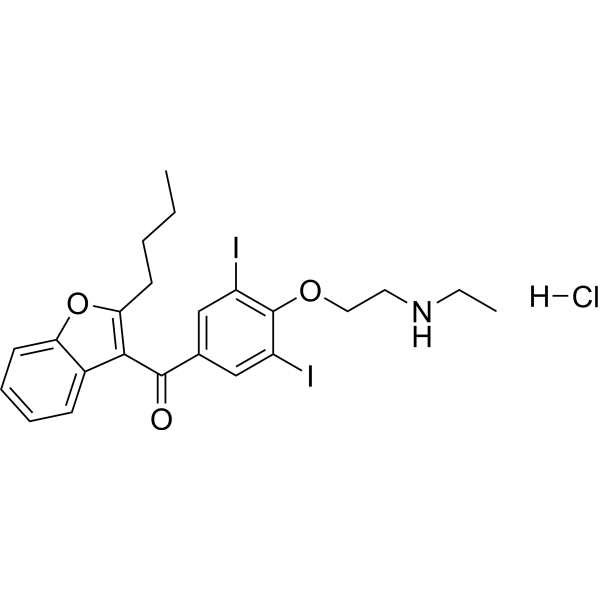 0 ImagesCat. No.: HY-130353RCAS No.: 96027-74-6Synonyms: N-Desethylamiodarone hydrochloride (Standard); LB 33020 hydrochloride (Standard)
Desethylamiodarone hydrochloride (Standard) (N-Desethylamiodarone hydrochloride (Standard); LB 33020 hydrochloride (Standard)) is the analytical standard of Desethylamiodarone hydrochloride (HY-130353). This product is intended for research and analytical applications. Desethylamiodarone hydrochloride (N-Desethylamiodarone hydrochloride; LB 33020 hydrochloride) is the major active metabolite of Amiodarone (HY-14187) generated via CYP3A4 metabolism. Desethylamiodarone hydrochloride downregulates p‑Akt, p‑Bad and Bcl‑2, upregulates Bax, promotes mitochondrial release of cytochrome c, activates caspase‑3 and cleaves PARP‑1, thereby inducing cell cycle arrest and apoptosis. Desethylamiodarone hydrochloride can be used in cervical cancer-related research.
-
Veratrole-d10
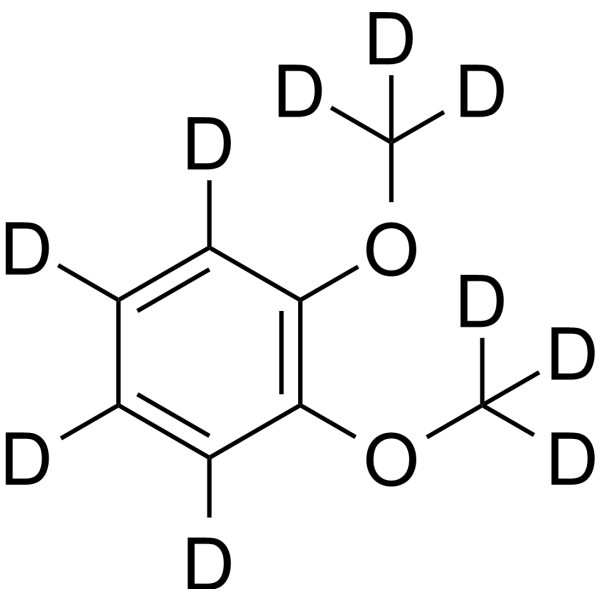 0 ImagesCat. No.: HY-B1812S2CAS No.: 362049-43-2Synonyms: 1,2-Dimethoxybenzene-d10
Veratrole-d10 is the deuterium labeled Veratrole. Veratrole (1,2-Dimethoxybenzene) is a key compound that widely exists in plants and attracts pollinators. The release of Veratrole has a circadian rhythm and plays an important role in plant reproduction, species differentiation, and interactions with pollinators. In addition, Veratrole can be demethylated by cytochrome P-450 in Streptomyces setonii.
-
4-Ipomeanol
 0 ImagesCat. No.: HY-106315CAS No.: 32954-58-8
4-Ipomeanol is a pneumotoxin. 4-Ipomeanol can be produced by the common sweet potato, Ipomoea batatas, in the presence of Fusarium solani. 4-Ipomeanol can be bioactivated by CYP4B1.
-
Tolterodine-d14 hydrochloride
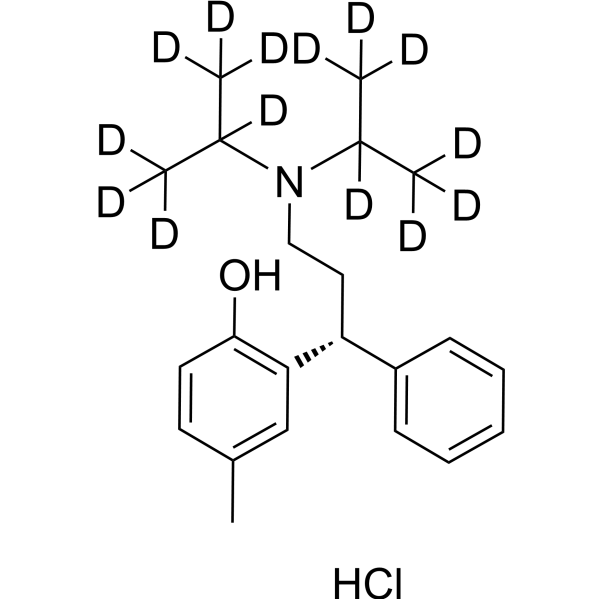 0 ImagesSynonyms: (R)-(+)-Tolterodine-d14 hydrochloride; (+)-Tolterodine-d14 hydrochloride; (R)-Tolterodine-d14 hydrochloride; PNU-200583-d14 hydrochloride
Tolterodine-d14 (hydrochloride) is the deuterium labeled Tolterodine hydrochloride. Tolterodine ((R)-(+)-Tolterodine) is a mAChR inhibitor and substrate for cytochrome P450 enzymes. Tolterodine competitively binds acetylcholine, reduces sympathetic excitation, and inhibits involuntary bladder muscle contraction. Tolterodine restores the Nrf2/NF-κB signaling pathway, mediates protection against inflammatory response and ferroptosis. Tolterodine ameliorates LPS (HY-D1056)-induced reactive oxygen species production and lipid oxidation. Tolterodine can be used for the research of urinary tract infections and overactive bladder.
-
(E/Z)-G256 dihydrochloride
 0 ImagesCat. No.: HY-177148BCAS No.: 136623-15-9
(E/Z)-G256 (dihydrochloride) is an isomer of G256 dihydrochloride (HY-177148A). G256 dihydrochloride is a cytochrome P450 substrate with antiarrhythmic properties. In recombinant monooxygenase systems, G256 dihydrochloride undergoes N-hydroxylation of the terminal aminoguanidine nitrogen, as well as ring hydroxylation catalyzed by cytochrome P4502C3. G256 dihydrochloride generates N-hydroxyaminoguanidine metabolites via N-hydroxylation in liver microsomal fractions. G256 dihydrochloride produces phenol metabolites through ring hydroxylation in both liver microsomal fractions and recombinant cytochrome P450 systems. G256 dihydrochloride can be used for research on arrhythmias.
-
Tolterodine (Standard)
 0 ImagesCat. No.: HY-A0024RCAS No.: 124937-51-5Synonyms: (R)-(+)-Tolterodine (Standard); (+)-Tolterodine (Standard); (R)-Tolterodine (Standard); PNU-200583 (Standard)
Tolterodine (Standard) is the analytical standard of Tolterodine. This product is intended for research and analytical applications. Tolterodine ((R)-(+)-Tolterodine) is a mAChR inhibitor and substrate for cytochrome P450 enzymes. Tolterodine competitively binds acetylcholine, reduces sympathetic excitation, and inhibits involuntary bladder muscle contraction. Tolterodine restores the Nrf2/NF-κB signaling pathway, mediates protection against inflammatory response and ferroptosis. Tolterodine ameliorates LPS (HY-D1056)-induced reactive oxygen species production and lipid oxidation. Tolterodine can be used for the research of urinary tract infections and overactive bladder.
-
(S)-Pulegone
 0 Images
(S)-Pulegone ((-)-Pulegone) is a cytochrome P450 (CYP450) substrate. (S)-Pulegone induces urothelial cytotoxicity, necrosis, regenerative proliferation and urinary bladder tumors in female rats. (S)-Pulegone induces rodent nephropathy, olfactory metaplasia, gastric hyperplasia/perforation at high dose. (S)-Pulegone can be used for the research of urinary bladder and hepatic neoplasms.
-
4-Methoxybiphenyl
 0 Images
4-Methoxybiphenyl is a cytochrome P450-dependent microsomal monooxygenase system substrate and metabolite precursor. 4-Methoxybiphenyl undergoes O-demethylation to generate 4-hydroxybiphenyl. 4-Methoxybiphenyl undergoes sulphation and glucuronidation conjugation; inhibition of sulphation shifts metabolism toward increased glucuronidation and unconjugated 4-hydroxybiphenyl accumulation. 4-Methoxybiphenyl serves as a model substrate for studying phase II metabolic conjugation pathway balance in rat isolated hepatocytes.
-
Veratrole-d2-1
 0 ImagesCat. No.: HY-B1812S4CAS No.: 3047059-94-6Synonyms: 1,2-Dimethoxybenzene-d2-1
Veratrole-d2-1 is the deuterium labeled Veratrole (HY-B1812). Veratrole (1,2-Dimethoxybenzene) is a key compound that widely exists in plants and attracts pollinators. The release of Veratrole has a circadian rhythm and plays an important role in plant reproduction, species differentiation, and interactions with pollinators. In addition, Veratrole can be demethylated by cytochrome P-450 in Streptomyces setonii.
-
α-Pinene oxide (Standard)
 0 ImagesCat. No.: HY-W130074RCAS No.: 1686-14-2
α-Pinene oxide (Standard) is the analytical standard of α-Pinene oxide (HY-W130074). This product is intended for research and analytical applications. α-Pinene oxide is a type of monoterpene epoxidation intermediate. α-Pinene oxide is produced via the cytochrome P-450-mediated oxidation pathway in Dendroctonus terebrans body microsomes and rat liver microsomes, and can be further converted into alcohols, ketones and insect pheromone derivatives. α-Pinene oxide can generate the perfume intermediate myrtenal. α-Pinene oxide is used in studies related to terpenoid metabolism and perfume synthesis.
-
Metflurazon
 0 ImagesCat. No.: HY-119470CAS No.: 23576-23-0Synonyms: SAN 6706
Metflurazon (SAN 6706) is a pro-herbicide that acts as a substrate for cytochrome P450 monooxygenase. Metflurazon undergoes sequential N-demethylation to form Norflurazon (HY-114849), which in turn exerts anti-cyanobacterial activity. Metflurazon inhibits cyclic photophosphorylation, growth, heterocyst formation, and exogenous ATP transport in cyanobacteria, reduces their survival rate, and induces a methylamine-like effect. Metflurazon can be used in studies related to herbicides and cyanobacteria.
-
Solavetivone
 0 ImagesCat. No.: HY-N12475CAS No.: 54878-25-0
Solavetivone is a Sesquiterpenoid phytoalexin and Antifungal agent. Solavetivone is isolated from stress-challenged potato plants. Solavetivone is hydroxylated by sesquiterpenoid phytoalexin hydroxylase (SPH/CYP76A2L). Solavetivone helps solanaceous plants defend against pathogens, damages plant cells after pathogen threat, and inhibits mycelial growth of Rhizoctonia solani. Solavetivone is applicable to studies related to Rhizoctonia solani infection.
-
Tolterodine tartrate-d14
 0 ImagesCat. No.: HY-90010SCAS No.: 1191280-48-4Synonyms: Kabi-2234-d14; PNU-200583E-d14
Tolterodine tartrate-d14 (Kabi-2234-d14) is deuterium labeled Tolterodine tartrate. Tolterodine ((R)-(+)-Tolterodine) is a mAChR inhibitor and substrate for cytochrome P450 enzymes. Tolterodine competitively binds acetylcholine, reduces sympathetic excitation, and inhibits involuntary bladder muscle contraction. Tolterodine restores the Nrf2/NF-κB signaling pathway, mediates protection against inflammatory response and ferroptosis. Tolterodine ameliorates LPS (HY-D1056)-induced reactive oxygen species production and lipid oxidation. Tolterodine can be used for the research of urinary tract infections and overactive bladder.



